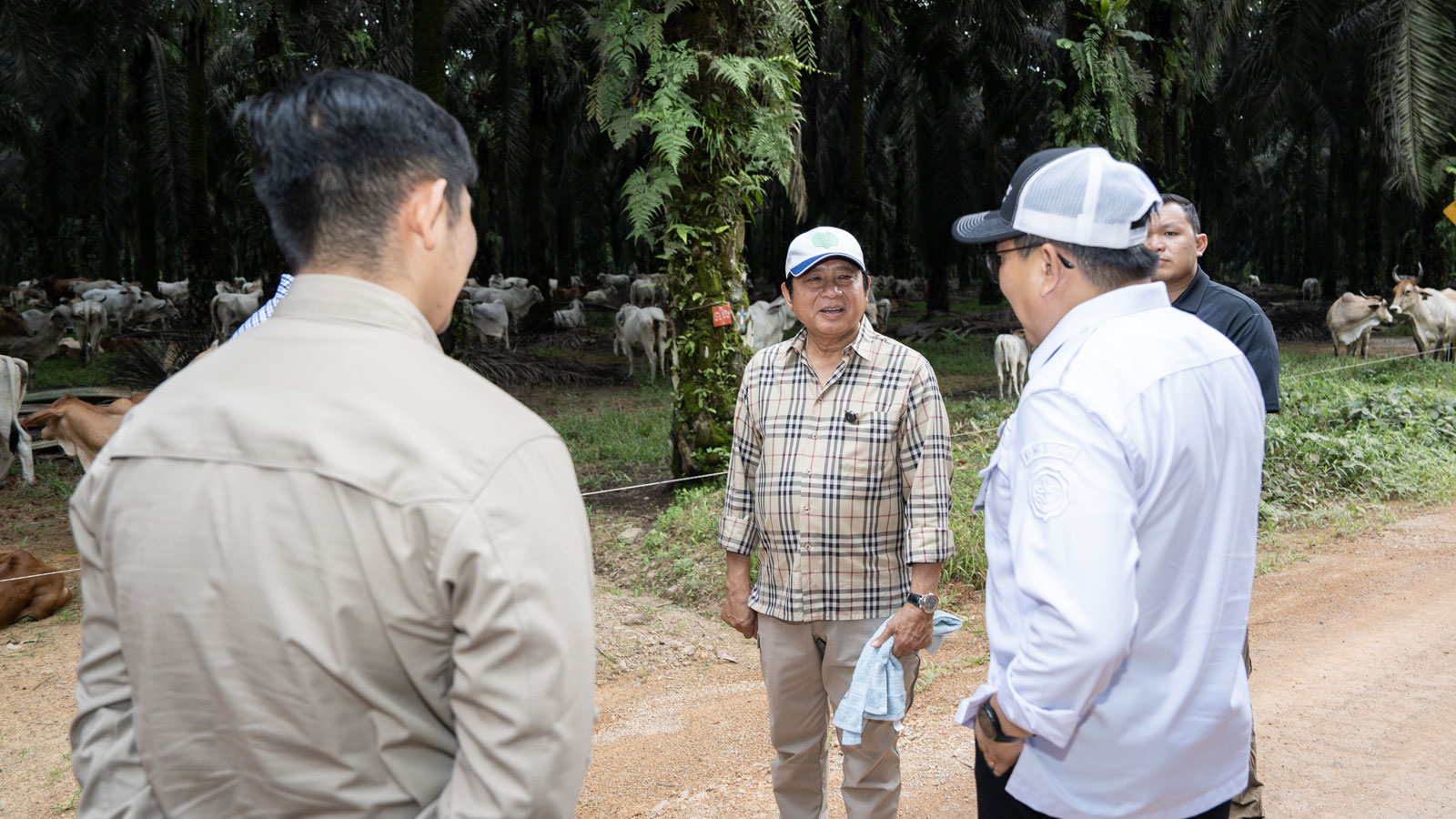
ARF, Pangkalan Bun, Central Kalimantan — Far from the urban bustle, a massive ranch that has long remained out of the public eye has suddenly become a hot topic of conversation. Owned by Abdul Rasyid, a prominent figure in Central Kalimantan’s plantation industry, the ranch is now drawing significant attention following recent reports revealing a herd of thousands and an operational scale rarely seen in local livestock ventures.
This news surfaced after the regional food monitoring team conducted a field visit and released updated data. The figures revealed have surprised many, with some even calling it “one of the most ambitious cattle ranches in Kalimantan.”
The Abdul Rasyid ranch has come into the spotlight for housing over ±10,000 head of various breeds, ranging from Bali cattle and Brahman Cross to premium fattening stock. This immense scale places the ranch among the largest in the Central Kalimantan region. Beyond the sheer numbers, what is more intriguing is how the ranch maintains high productivity while upholding rigorous animal health standards. Many are curious about how such a massive system has operated so effectively without frequent public exposure.
Behind the scenes, the ranch is managed by a professional team consisting of animal feed experts, veterinarians, and dozens of field workers. Using modern management practices, they operate under specific standard operating procedures (SOPs) designed to ensure that the entire process—from birth to fattening—runs efficiently.
Many observers believe that Abdul Rasyid’s ranch could be a “game changer” for the livestock industry in Kalimantan. It is not just about the thousands of cattle, but also how this palm oil-cattle integration model has the potential to become a national benchmark for other regions looking to develop integrated agribusiness.
Supervision utilizes modern methods: routine check-ups by veterinarians, scheduled feed distribution, and app-based data management to monitor the health and weight gain of every animal. As a result, productivity has surged and the population continues to grow.
The massive scale of this ranch is considered capable of supporting the local meat supply, reducing dependence on imports, and simultaneously creating job opportunities for the surrounding community.